



All Products
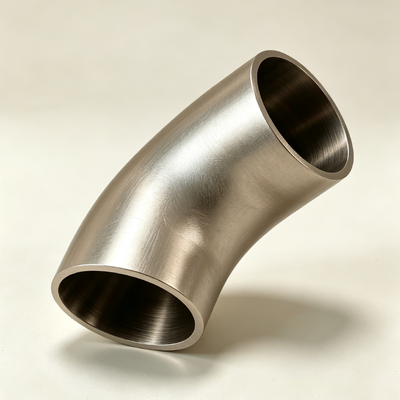
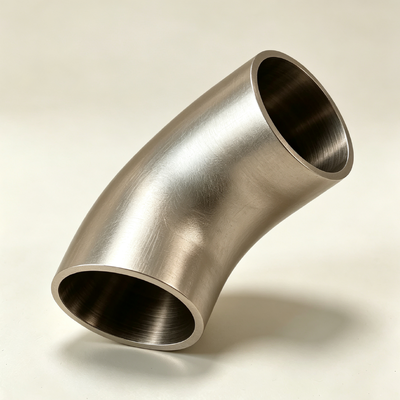
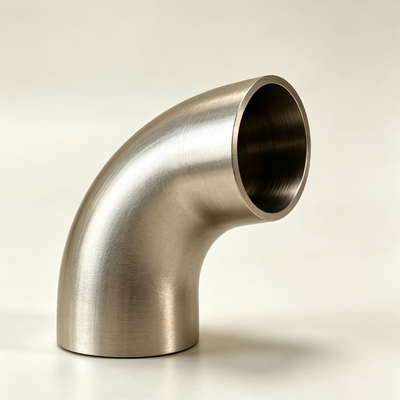
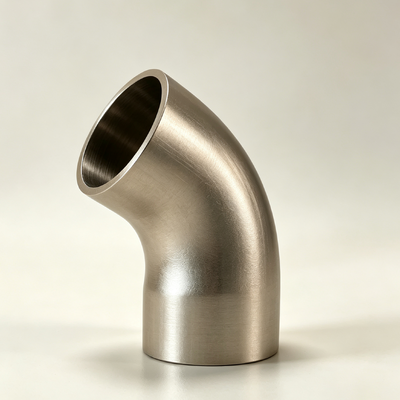
70/30 Copper Nickel Elbow Butt Welding Pipe Fittings ASME B16.9 for Marine Offshore



| Place of Origin | Shanghai,China |
|---|---|
| Brand Name | TOBO |
| Certification | ISO/TUV/SGS |
| Model Number | Copper Nickel Elbow |
| Minimum Order Quantity | 1PC |
| Price | Negotiable |
| Packaging Details | Standard Shipping Package |
| Delivery Time | 15-30 Workdays |
| Payment Terms | T/T, Western Union |
| Supply Ability | 10Ton/Month |
Product Details
| Product Name | 70/30 Copper Nickel Elbow Butt Welding Pipe Fittings ASME B16.9 For Marine Offshore | Head Type | Round |
|---|---|---|---|
| Pressure Rating | Class 150 - Class 2500 | Weight | 0.23 Lbs |
| Radius | Short/Long Radius | Color | Silver |
| Length | Customized | Thermalconductivity | Approximately 29 W/m·K |
| Connectiontype | Butt Weld Or Socket Weld | Application | Marine, Offshore, Chemical Processing Industries |
| Temperature Rating | Up To 400°F | Productname | Copper Nickel Elbow |
| Size | Customized | Package | Wooden Case |
| Connection | Socket Weld | ||
| Highlight | 70/30 copper nickel elbow fittings,butt welding pipe fittings ASME B16.9,marine offshore copper nickel elbow |
||
Product Description
70/30 Copper Nickel Elbow Butt Welding Pipe Fittings ASME B16.9 for Marine Offshore
1.Product Description
The Copper Nickel Elbow is a piping directional component specifically engineered for highly corrosive service environments. Its base material is a copper-nickel solid-solution alloy with a face-centered cubic lattice structure, maintaining excellent microstructural stability at ambient and intermediate temperatures. This proposal covers two mainstream alloy systems—C70600 (90/10) and C71500 (70/30)—differing in nickel content, which determines their passivation behavior and mechanical response in specific media.
The product is manufactured through a fully hot-forming process. Small diameters (DN≤200) are preferentially produced by seamless push-forming to eliminate weld seam vulnerabilities; medium diameters (DN200~DN400) employ hot extrusion plus sizing processes, balancing cost and quality; large diameters (DN≥400) use medium-frequency induction bending or steel-plate welded forming to meet large-size requirements. All product ends are designed for butt-welded connections, with flanged or grooved interfaces also available upon customer request.
Each elbow undergoes dimensional inspection, material verification via spectrum analysis, and surface hardness spot-checking prior to shipment. Product marking is applied by low-stress stamping or laser etching to ensure clear identification without damaging the substrate.
2.Product Applications
This product is recommended for the following typical operating conditions, with selection requiring comprehensive assessment of medium composition, operating temperature, and flow characteristics:
Scenario A: Ambient Seawater Conveyance Systems (Temperature ≤50°C, Velocity 1~3m/s)
Suitable for shipboard overboard cooling water, seawater firewater systems, and pier/port facility water supply lines. In this service, C70600 offers optimal cost-effectiveness; Sch40S wall thickness achieves a minimum service life of 15 years.
Scenario B: High-Temperature Seawater or Brackish Water Systems (Temperature 50~120°C, Chloride ≥10000ppm)
Suitable for power plant circulating water heat exchanger inlet/outlet piping and nuclear facility equipment cooling water systems. C71500 is recommended, with wall thickness increased to at least Sch80S to mitigate accelerated corrosion at elevated temperatures.
Scenario C: Sand-Laden or High-Turbulence Seawater Systems (Solids ≥50mg/L, Local Velocity ≥4m/s)
Suitable for offshore platform riser scour zones, subsea pipeline expansion bends, and dredger discharge pipe turning sections. C71500 is mandatory, with additional wall thickness allowance (suggested 2~3mm above calculated value) and optional wear-resistant liners or hardfacing alloy overlays on the elbow back.
Scenario D: Chemical Corrosive Media Pipelines (pH 3~9, Containing Organic Acids or Chlorides)
Suitable for chemical plant brine purification, chlor-alkali electrolysis circuits, and pharmaceutical intermediate transfer. Grade selection depends on the specific medium; C70600 generally applies, but if ammonia or amine compounds are present, C71500 should be substituted or manufacturer consultation is required.
Scenario E: Food and Hygienic Clean Service Pipelines
Suitable for dairy, beverage, purified water, and water-for-injection systems. C70600 is selected with internal surface electropolished to Ra≤0.4μm, accompanied by third-party material extractable test reports.
3.Product Advantages
Versus Carbon Steel Elbow + Anti-Corrosion Coating:
-
Once coating is damaged on carbon steel, localized corrosion accelerates dramatically, with pitting perforation occurring in as little as 6 months; copper-nickel elbows maintain a constant corrosion rate even when scratched, due to self-healing oxide film.
-
Carbon steel solutions require recoating or replacement every 2~3 years, whereas copper-nickel elbows are designed for 20+ years of service, demonstrating clear long-term economic superiority.
-
Non-uniform coating thickness inside carbon steel elbows increases local flow resistance; copper-nickel elbows have homogeneous wall material with a constant equivalent roughness throughout the flow path.
Versus Stainless Steel (316L, Duplex) Elbows:
-
In stagnant seawater, 316L is vulnerable to crevice corrosion and pitting, while duplex stainless steels are sensitive to welding heat input; copper-nickel alloys are insensitive to both failure modes.
-
Stainless steels may suffer stress corrosion cracking in sulfide-containing seawater; copper-nickel alloys present no such risk.
-
Copper-nickel alloys have superior machinability compared to duplex stainless steel, shortening delivery lead time by 30%.
Versus Titanium Alloy Elbows:
-
Titanium alloys offer the highest corrosion resistance, but material cost is approximately 5~8 times that of copper-nickel, with greater processing difficulty and longer delivery periods.
-
Copper-nickel alloys provide adequate corrosion resistance for the vast majority of seawater services; titanium should only be considered when temperatures exceed 150°C or chloride concentrations exceed 50000ppm.

4.Key Product Specifications
| Parameter Category | Detailed Indicators |
| Alloy Grade vs. Medium Guide | C70600: Clean seawater, fresh water, steam, petroleum products; C71500: Contaminated seawater, brackish water, sand-laden seawater, high-temperature brine |
| Size Supply Matrix | DN15, 20, 25, 32, 40, 50, 65, 80, 100, 125, 150, 200, 250, 300, 350, 400, 450, 500, 600, 700 (sizes above 750 available on order) |
| Wall Thickness Schedule Reference | Sch5S (≤2.0mm), Sch10S (≤3.0mm), Sch40S (≤5.0mm), Sch80S (≤8.0mm), Sch160 (≤12.0mm), XXS (≥12.0mm) |
| End Bevel Detailed Parameters | BW ends: Bevel angle 37.5°±2.5°, land 1.5±0.5mm, root gap 2.0±0.5mm; SW ends: Socket depth ≥1.2×wall thickness, socket ID 0.3~0.6mm larger than pipe OD |
| Bend Angle Tolerance | 45°±0.8°; 90°±0.8°; 180°±1.2° (extra-long radius products subject to separate agreement) |
| Centre-to-End Dimension Tolerance | DN≤300: ±1.5mm; DN>300: ±3.0mm |
| Minimum Back Wall Thickness | ≥87.5% of nominal wall thickness (i.e., thinning ≤12.5%), measured on the outer arc at the elbow back |
| Grain Size | Per ASTM E112, not less than Grade 5; adjacent grain size variation ≤3 grades |
| Intergranular Corrosion Test | Per ASTM G28 Method A, specimen corrosion rate ≤0.25mm/year (C70600) or ≤0.20mm/year (C71500) |
| Welding Heat Input Limits | C70600: Maximum heat input ≤1.5kJ/mm; C71500: Maximum heat input ≤1.8kJ/mm; interpass temperature ≤150°C |
| Preheat and Interpass Temperature Requirements | Preheating generally not required; if ambient temperature <5°C, preheat to 50~80°C; control interpass temperature ≤150°C |
| Post-Weld Heat Treatment | Not mandatory; if specified by customer, hold at 580~620°C for 1 hour, furnace cool to 300°C then air cool |
| Maximum Hardness (HBW) | C70600≤125; C71500≤145 |
| Electrical Resistivity (20°C) | C70600: 0.32μΩ·m; C71500: 0.42μΩ·m (note: relevant parameter for electrochemical corrosion reference) |
| Linear Thermal Expansion Coefficient (20~300°C) | C70600: 16.6×10⁻⁶/°C; C71500: 16.2×10⁻⁶/°C |
| Packaging and Shipping Requirements | Individual elbows wrapped in EPE foam and packed in separate cartons; large sizes secured on wooden skids with stretch film wrapping; desiccants and rust-preventive paper added for ocean shipping |
| Warranty Conditions | Within 18 months from delivery date or 12 months from installation (whichever comes first), free replacement for failures attributable to material or manufacturing defects |
| Accompanying Documentation | Certificate (EN 10204 3.1 or 3.2), dimensional inspection report, PT/RT reports (if applicable), heat treatment record chart, material retest report |
FAQ
1. Are you trading company or manufacturer ? We are manufacturer ,You can see the certification.
2.How long is your delivery time? Generally it is 5-10 days if the goods are in stock. or it is 15-20 days if the goods are not in stock, it is according to quantity.
3. Do you provide samples ? is it free or extra ? Yes, we could offer the sample for free charge but need pay the cost of freight.
4. What is your terms of payment ? Payment<=1000USD, 100% in advance. Payment>=1000USD, 50% T/T in advance ,balance before shippment.
Recommended Products