



All Products
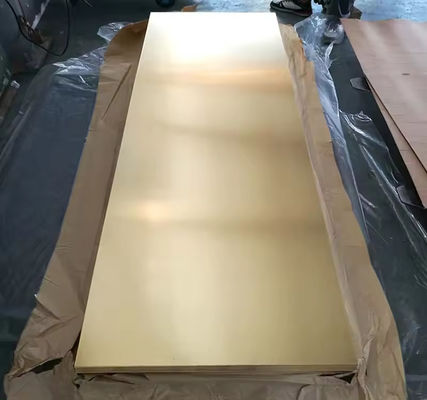
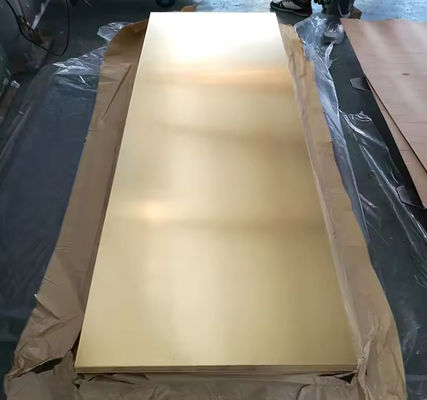
ASME SB171 CuNi 90/10 C70600 Copper Nickel Tubesheet Plate for Condenser Heat Exchanger

| Place of Origin | Shanghai,China |
|---|---|
| Brand Name | TOBO |
| Certification | ISO/TUV/SGS |
| Model Number | Copper Nickel Plate |
| Minimum Order Quantity | 1PC |
| Price | Negotiable |
| Packaging Details | Standard Shipping Package |
| Delivery Time | 15-30 Workdays |
| Payment Terms | T/T, Western Union |
| Supply Ability | 10Ton/Month |
Product Details
| Product Name | Copper Nickel Plate | Packing | Standard Seaworthy Package |
|---|---|---|---|
| Alloy Or Not | Is Alloy | Materialcomposition | Copper-Nickel Alloy |
| Tensilestrength | 350 - 550 MPa | Key Word | Copper Sheet Plates |
| Connection | Welding | Boiling Point | 2562℃ |
| Wall Thickness | Customized | Connection Type | Welding / Bolted / Flanged |
| Coppercontent | 70% - 90% | Surface Finish | Polished |
| Productname | Copper Nickel Plate | Surface Treatment | Polished |
| Widthrange | 100mm - 1500mm | Elongation | ≥30% |
Product Description
ASME SB171 CuNi 90/10 C70600 Copper Nickel Tubesheet Plate for Condenser Heat Exchanger
1. Product Description
Copper nickel plate, also known as cupronickel plate or white copper plate, is a solid-solution alloy plate with copper as the base and nickel as the principal alloying element, presenting a silver-white appearance. The industrially relevant grades are not simple binary copper-nickel alloys but iron-modified cupronickels containing deliberate additions of iron and manganese: iron enhances resistance to impingement corrosion and pitting, while manganese serves as a deoxidizer and structure stabilizer. The two dominant grades are B10 (BFe10-1-1 / UNS C70600 / CuNi 90/10) and B30 (BFe30-1-1 / UNS C71500 / CuNi 70/30). Copper nickel plate is supplied in annealed, half-hard, or hard tempers across thin-gauge to heavy-plate thickness ranges.
2. Applications
Marine and offshore engineering is the largest application sector, covering seawater cooling systems, condenser tube plates, seawater piping liners, valve and pump components, propeller sleeves, sea-water valve boxes, sea chests, and ballast water systems.
In seawater desalination, the material is used for heat-transfer plates in multi-effect distillation units, evaporator liners, and seawater intake and pretreatment equipment; B10 is typical for moderate conditions, while B30 is specified for high-velocity or more aggressive environments.
In power generation, it is used for condenser tube plates in coastal thermal and nuclear plants, seawater cooling tower heat-exchange components, and circulating-water seawater heat exchangers, where cupronickel replaces stainless steels to improve chloride pitting resistance and thermal efficiency.
In petrochemical and salt chemical processing, it is used for brine storage tanks, linings for dilute acid and alkali reaction vessels, chloride and brine transfer equipment, corrosive-service components in coastal refineries, and seawater piping and firefighting systems on offshore oil and gas platforms.
Other applications include corrosion-resistant instrument housings, sensor backing plates, seawater heat pump and seawater-source air-conditioning heat-exchange plates, saline-media equipment in wastewater treatment, naval corrosion-resistant structural components, and wear-resistant liners for precision machinery.
3. Product Advantages
First, superior seawater corrosion resistance. B10 typically corrodes at rates as low as no more than 0.025 mm/year in clean seawater, with resistance to pitting, crevice corrosion, and stress corrosion cracking. B30, owing to its higher nickel content, forms a more stable and compact passive film, giving it clearly better performance in high-temperature seawater, high-velocity conditions, and media containing hydrogen sulfide.
Second, inherent fouling-resistance capability. Copper-ion release gives the alloy intrinsic biofouling-resistant properties, reducing the settlement of algae and barnacles and lowering maintenance requirements. The 90/10 grade also helps limit the settlement of fouling organisms on wetted surfaces.
Third, thermal conductivity far exceeding stainless steels. B10 has a thermal conductivity of approximately 46 to 50 W/(m·K), about three times that of 304 stainless steel; B30 is approximately 29 W/(m·K). In heat exchangers and condensers, this translates directly into higher heat-transfer efficiency and more compact equipment.
Fourth, good fabrication and welding characteristics. High ductility and toughness make the alloy suitable for cold bending, stamping, flaring, and forming; TIG welding and brazing performance is good, and mechanical properties are retained down to cryogenic temperatures.
Fifth, non-magnetic. It is suitable for magnetically sensitive naval equipment and electromagnetic environments.
Sixth, tiered cost structure. With about 10% nickel, B10 offers a pronounced cost advantage for routine seawater service; B30 commands a higher cost but delivers long-term reliability under more severe conditions, creating a clear application split.
4. Product Functions
Corrosion barrier function: In seawater, salt spray, and chloride-bearing media, a compact, nickel- and iron-enriched passive film forms on the surface, separating the substrate from the corrosive environment and suppressing the initiation and propagation of pitting, crevice corrosion, and general corrosion.
Fouling-resistance function: Controlled release of copper ions helps inhibit the settlement and growth of fouling organisms, maintaining a relatively clean heat-transfer interface in marine service.
Heat-transfer function: As condenser tube plates, heat-exchanger plates, or cooling components, the material efficiently transfers heat between a corrosive coolant and a process stream, combining corrosion resistance with thermal performance.
Structural and sealing function: In seawater piping, pump and valve bodies, flanges, and pressure vessels, copper nickel plate provides corrosion-resistant structural support and sealing interfaces capable of withstanding media pressure, flow-induced impingement, and mechanical loads.
5. Key Technical Parameters
| Category | Parameter | B10 / C70600 | B30 / C71500 | Remarks / Standards |
| Chemical composition | Cu | Rem. | Rem. | wt% |
| Chemical composition | Ni | 9.0–11.0 | 29.0–33.0 | wt% |
| Chemical composition | Fe | 1.0–1.5 | 0.4–1.0 | wt% |
| Chemical composition | Mn | 0.5–1.0 | ≤1.0 | wt% |
| Mechanical properties | Tensile strength | 300–380 MPa | 350–370 MPa, higher depending on temper | Typical annealed values |
| Mechanical properties | Yield strength, 0.2% proof stress | 100–200 MPa | Approx. 120 MPa | Typical annealed values |
| Mechanical properties | Elongation | ≥27–30% | ≥35% | Typical annealed values |
| Mechanical properties | Hardness | HB 70–120, HV approx. 90 | HV approx. 100, HB depending on temper | B30 tensile strength can be significantly increased in the cold-worked condition |
| Physical properties | Density | Approx. 8.90 g/cm³ | Approx. 8.95 g/cm³ | Typical values |
| Physical properties | Melting range | 1100–1150 °C | 1170–1240 °C | Typical values |
| Physical properties | Thermal conductivity | Approx. 46–50 W/(m·K) | Approx. 29 W/(m·K) | Typical values |
| Physical properties | CTE, 10–300 °C | Approx. 16–17 ×10⁻⁶/K | Approx. 16 ×10⁻⁶/K | Typical values |
| Physical properties | Modulus of elasticity | Approx. 135 GPa | Approx. 152 GPa | Typical values |
| Physical properties | Electrical resistivity | Approx. 19 μΩ·cm | Approx. 34 μΩ·cm | Typical values |
| Physical properties | Magnetic | Non-magnetic; solution annealing and rapid cooling required for special requirements | Non-magnetic | Subject to technical requirements |
| Supply specifications | Thickness | General: thin plate approx. 0.5–6 mm; medium plate approx. 6–30 mm; heavier plate depending on grade and standard | General: same as left, depending on grade and standard | Specific thickness-width combinations to be confirmed according to project or procurement standards |
| Supply specifications | Width | General: approx. 500–1500 mm, custom slitting available | General: same as left, custom slitting available | Specific specifications subject to manufacturer capability |
| Standards | Common standards | ASTM B122, ASTM B151, GB/T 5231, etc.; ASTM B171 system for seawater condenser tube plates | Same as left | According to project or procurement standards |
| Selection note | Recommended service | Preferred for routine seawater heat exchange, marine seawater piping, and cost-sensitive applications | Recommended for severe conditions such as seawater above approx. 60 °C, flow velocity above approx. 3 m/s, high-pressure piping, or corrosive media | Select according to actual service conditions |

FAQ
1. Are you trading company or manufacturer ? We are manufacturer ,You can see the certification.
2.How long is your delivery time? Generally it is 5-10 days if the goods are in stock. or it is 15-20 days if the goods are not in stock, it is according to quantity.
3. Do you provide samples ? is it free or extra ? Yes, we could offer the sample for free charge but need pay the cost of freight.
4. What is your terms of payment ? Payment<=1000USD, 100% in advance. Payment>=1000USD, 50% T/T in advance ,balance before shippment.
Recommended Products