



All Products
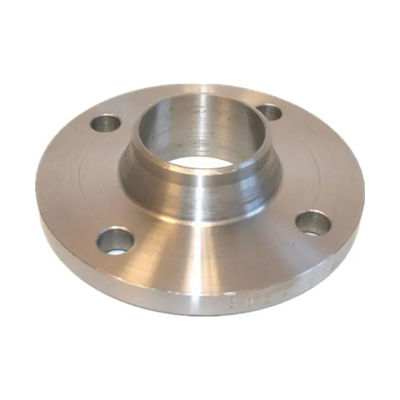
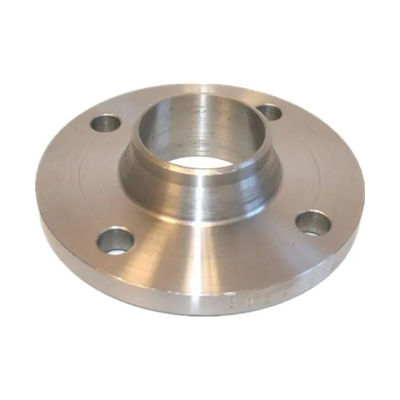
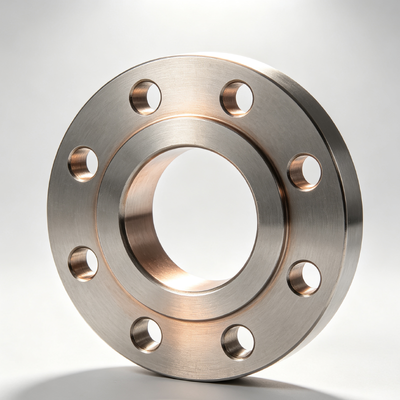
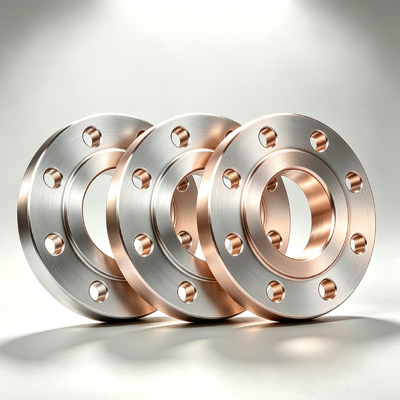
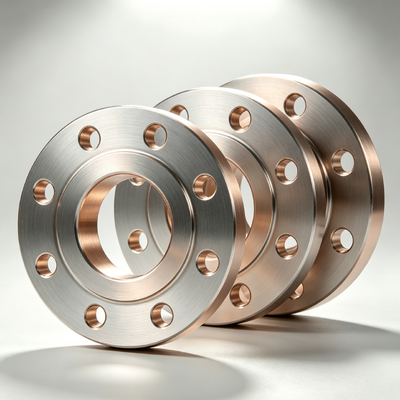
CuNi 70/30 Forged Socket Weld Flange ASME B16.5 Class150 Marine Seawater Resistant


| Place of Origin | Shanghai,China |
|---|---|
| Brand Name | TOBO |
| Certification | ISO/TUV/SGS |
| Model Number | Copper Nickel Flange |
| Minimum Order Quantity | 1PC |
| Price | Negotiable |
| Packaging Details | Standard Shipping Package |
| Delivery Time | 15-30 Workdays |
| Payment Terms | T/T, Western Union |
| Supply Ability | 10Ton/Month |
Product Details
| Product Name | CuNi 70/30 Forged Socket Weld Flange ASME B16.5 Class150 Marine Seawater Resistant | Coppercontent | 70% Copper |
|---|---|---|---|
| Keyword | Copper Flange | Tensilestrength | Approximately 450 MPa |
| Standard | ASTM B466 | Strength | High |
| Finish | Plain | Surface Treatment | Polishing, Sand Blasting, Etc. |
| Product Type | Socket Welded Flange | Thickness | Sch5s, Sch10s, Sch40s, Sch80s, Etc. |
| Package | Wooden Case, Pallet, Etc. | Type | Slip-On, Weld Neck, Blind, Threaded |
| Inspection | 100% X-ray, Dye Penetrant, Ultrasonic | Class | 150, 300, 600, 900, Etc. |
| Use | Machanical Parts | Pressure Rating | 150#, 300#, 600#, 900#, 1500#, 2500# |
| Highlight | CuNi 70/30 forged flange,marine seawater resistant flange,ASME B16.5 socket weld flange |
||
Product Description
CuNi 70/30 Forged Socket Weld Flange ASME B16.5 Class150 Marine Seawater Resistant
1.Product Description
Copper Nickel Flanges are pipe-connecting components manufactured from copper‑nickel alloy systems, specifically the 90/10 (UNS C70600, BFe10‑1‑1) and 70/30 (UNS C71500, BFe30‑1‑1) grades. These alloys are characterized by their excellent resistance to seawater, brackish water, and various chloride‑containing industrial media. The manufacturing process begins with hot forging to refine the grain structure, followed by solution annealing for homogenization, and then precision CNC turning, milling, and drilling to achieve exact dimensional compliance. Surface finishing includes acid pickling and passivation to eliminate embedded iron and oxides, promoting a stable cuprous oxide film. Each flange is subjected to ultrasonic and magnetic particle inspection to ensure internal and surface integrity. Dimensional standards follow ASME B16.5, EN 1092‑1, GB/T 9119, and EEMUA 145, with permanent laser marking providing full traceability from melt to finished product.
2.Product Applications
Core Industries:
-
Commercial Shipping & Marine Engineering: Seawater cooling loops, ballast water management, deck fire‑fighting systems, and auxiliary seawater services for container vessels, bulk carriers, tankers, cruise ships, and ferries.
-
Offshore Energy Sector: Seawater lift and firewater deluge systems, heat exchanger cooling bundles, and water injection pipelines on fixed platforms and floating production units.
-
Water Treatment & Desalination: Intake, pre‑treatment, brine discharge, and permeate transfer lines in both thermal (MSF/MED) and membrane (RO) desalination plants.
-
Power Generation: Once‑through and recirculating seawater cooling systems for condensers and auxiliary coolers at coastal power stations.
-
Industrial Processing: Heat exchangers, evaporators, and condensers in chemical, petrochemical, and food processing plants where corrosive media are handled.
-
Aquaculture: High‑capacity seawater supply systems for fish, shrimp, and shellfish farming operations.
Typical Application Scenarios:
-
Pump suction and discharge connections.
-
Valve and strainer installations.
-
Heat exchanger tube bundle access points.
-
Pipeline isolation and future expansion tie‑ins.
3 . Product Advantages
-
Primary Connection: The flange serves as a bolted mechanical joint that connects two pipe ends, or connects a pipe to equipment such as pumps, valves, heat exchangers, and strainers. This allows for secure, rigid alignment of the piping system while enabling future disassembly.
-
Leak‑Tight Sealing: When bolted with a compatible gasket (spiral wound, graphite, PTFE, or metal jacketed), the flange faces compress the gasket to create a pressure‑containing seal. Different facing types — Raised Face (RF), Flat Face (FF), Ring Type Joint (RTJ), and Tongue & Groove (T&G) — are designed for specific pressure and temperature ranges, ensuring containment of liquids, gases, or two‑phase media without fugitive emissions.
-
System Termination: Blind flanges, which are solid plates without a bore, are used to cap open pipe ends, vessel nozzles, or test ports. They are essential for hydrostatic testing, planned future connections, or permanently closing off unused branches.
-
Maintenance Facilitation: Lap joint flanges, combined with stub ends, allow rapid assembly and disassembly without rotating heavy pipes. Threaded flanges provide a welding‑free connection, both of which simplify equipment access for internal cleaning, tube bundle replacement, or instrumentation calibration.
-
Stress Distribution: Weld neck flanges incorporate a long, tapered hub that smoothly transfers bending moments, thermal expansion forces, and pressure‑induced loads away from the weld root, reducing stress concentration and extending joint fatigue life in demanding cyclic service.
-
Standardized Interfacing: All flange dimensions are governed by international standards, ensuring that flanges from different manufacturers with the same rating and size are fully interchangeable. This simplifies procurement, maintenance inventory, and future system expansions.

4.Key Product Specification
| Category | 90/10 Cu Ni (C70600) | 70/30 Cu Ni (C71500) |
| Chemical Composition (main) | Cu 86 90%, Ni 9 11%, Fe 0.8 1.8%, Mn 0.4 1.0% | Cu 65 70%, Ni 29 33%, Fe 0.4 1.0%, Mn 0.5 1.0% |
| Density | ~8.94 g/cm³ | ~8.94 g/cm³ |
| Tensile Strength (annealed) | 275 – 360 MPa | 345 – 420 MPa |
| Yield Strength 0.2% (annealed) | 90 – 160 MPa | 120 – 200 MPa |
| Elongation (annealed) | ≥30% | ≥30% |
| Hardness (HB) | ≤110 | ≤130 |
| Continuous Service Temp. | -196°C to 300°C | -196°C to 300°C |
| General Specifications | Values / Options |
| Size Range | DN15 – DN1500 (½" – 60") |
| Pressure Ratings | Class 150, 300, 600, 900, 1500, 2500 (ASME); PN6, PN10, PN16, PN25, PN40, PN64, PN100 |
| Flange Types | Weld Neck (WN), Slip On (SO), Blind (BL), Threaded (Th), Socket Weld (SW), Lap Joint (LJ) |
| Facing Types | RF (Raised Face), FF (Flat Face), RTJ (Ring Type Joint), T&G (Tongue & Groove), FM/M (Female/Male) |
| Design Standards | ASME B16.5 / B16.47, EN 1092 1, GB/T 9119, EEMUA 145 |
| Surface Treatment | Pickling & passivation (standard); electropolishing (optional) |
| NDT | 100% visual & dimensional; UT (ultrasonic), MT (magnetic particle), PT, hydrostatic on request |
| Certification | EN 10204 3.1 / 3.2 mill certificates; third party inspection (BV, DNV, ABS, LR) upon request |
FAQ
1. Are you trading company or manufacturer ? We are manufacturer ,You can see the certification.
2.How long is your delivery time? Generally it is 5-10 days if the goods are in stock. or it is 15-20 days if the goods are not in stock, it is according to quantity.
3. Do you provide samples ? is it free or extra ? Yes, we could offer the sample for free charge but need pay the cost of freight.
4. What is your terms of payment ? Payment<=1000USD, 100% in advance. Payment>=1000USD, 50% T/T in advance ,balance before shippment.
Recommended Products