



All Products
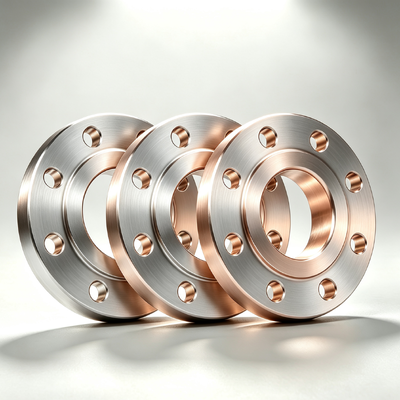
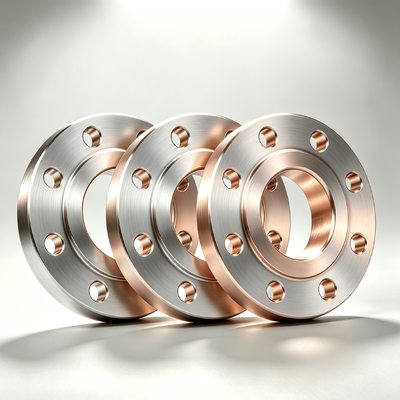
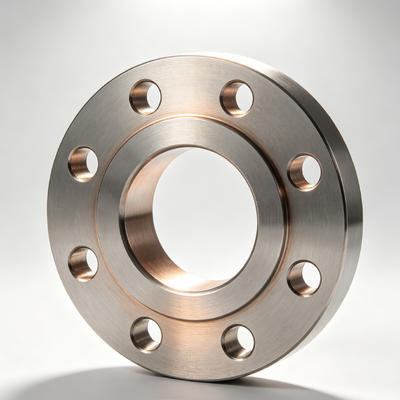
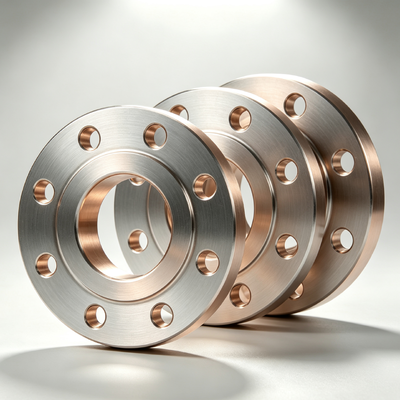
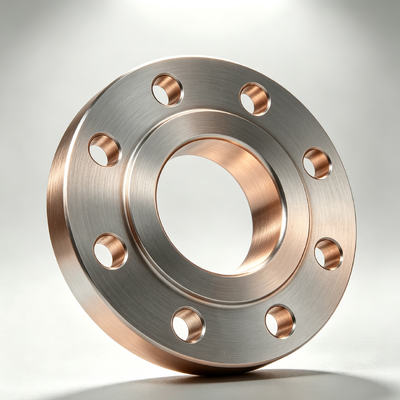
C71500 Cupro Nickel Forged Flange Class 150 Socket Weld ASME B16.5 Seawater Corrosion Proof


| Place of Origin | Shanghai,China |
|---|---|
| Brand Name | TOBO |
| Certification | ISO/TUV/SGS |
| Model Number | Copper Nickel Flange |
| Minimum Order Quantity | 1PC |
| Price | Negotiable |
| Packaging Details | Standard Shipping Package |
| Delivery Time | 15-30 Workdays |
| Payment Terms | T/T, Western Union |
| Supply Ability | 10Ton/Month |
Product Details
| Product Name | C71500 Cupro Nickel Forged Flange Class 150 Socket Weld ASME B16.5 Seawater Corrosion Proof | Compressive Strength | Strong |
|---|---|---|---|
| Strength | High | Easy Installation | Yes |
| Standard | ASTM B466 | Corrosionresistance | High Resistance To Seawater Corrosion |
| Warranty | 1 Year | Sealing Surface Form | RF MFM TG RJ |
| Coppercontent | 70% Copper | Keyword | Copper Flange |
| Special Functions | Resistance To Corrosion | Sizerange | 1/2 Inch To 48 Inches |
| Density | 8.9 G/cm³ | Face Type | Weld Neck |
| Manufacturing Process | RF | Customized Support | OEM |
| Highlight | C71500 Cupro Nickel forged flange,Class 150 socket weld flange,ASME B16.5 seawater corrosion proof flange |
||
Product Description
C71500 Cupro Nickel Forged Flange Class 150 Socket Weld ASME B16.5 Seawater Corrosion Proof
1.Product Description
The Copper Nickel Flange is a high-performance piping connection component precision-engineered from copper-nickel alloy systems, primarily available in two established industry grades: UNS C70600 (90/10 Copper-Nickel, equivalent to BFe10-1-1) and UNS C71500 (70/30 Copper-Nickel, equivalent to BFe30-1-1). These flanges are not merely cast or machined from standard stock; they undergo a rigorous and meticulously controlled manufacturing cycle that commences with premium-grade electrolytic copper and pure nickel ingots, carefully alloyed with controlled additions of iron and manganese to enhance mechanical properties and localized corrosion resistance.
The production sequence begins with multi-stage hot forging to refine the grain structure and eliminate internal porosity, followed by a precisely controlled solution annealing treatment conducted within protective atmosphere furnaces to achieve optimal recrystallization and uniform phase distribution. Subsequent steps include high-precision CNC turning, milling, and drilling operations that ensure exact dimensional conformity to international standards, with sealing faces machined to specific roughness parameters (typically Ra 3.2 – 6.3 μm for standard finishes, and Ra 0.8 – 1.6 μm for critical sealing applications). Each flange undergoes 100% non-destructive testing (NDT) including ultrasonic testing (UT) for internal lamination and volumetric defects, magnetic particle inspection (MT) for surface and near-surface flaw detection (given the alloy's paramagnetic nature requiring specialized wet-fluorescent techniques), and hydrostatic pressure testing where specified. The final surface treatment involves a comprehensive degreasing, acid pickling, and passivation process that removes surface oxides, embedded iron particles, and contaminants, subsequently forming a stable, protective cuprous oxide film which significantly enhances the material's innate resistance to marine and chemical attack. Furthermore, every finished flange is clearly and permanently marked per ASME or customer-specific requirements, denoting material grade, size, pressure class, heat number, and manufacturing traceability codes. Bore sizing, hub profiles, and bevel end preparations are meticulously configured to match specific pipe schedules and welding procedures, ensuring seamless integration into complex piping networks.
2.Product Applications
Owing to their unparalleled combination of seawater corrosion resistance and inherent biofouling deterrent properties, Copper Nickel Flanges have become the quintessential choice for fluid handling systems exposed to aggressive aqueous environments, particularly those involving natural or brackish seawater. Their application footprint spans a remarkably broad spectrum of critical industries:
Marine and Shipbuilding Industry: These flanges are extensively specified for vital shipboard systems, including main engine and auxiliary engine high-temperature seawater cooling circuits, ballast water management systems (complying with IMO D-2 and USCG discharge standards), deck fire-fighting mains, emergency bilge suction lines, and sanitary seawater supply systems for both merchant fleets (container ships, bulk carriers, LNG carriers) and naval defense vessels (frigates, destroyers, submarines). They are also integral to stern tube cooling and shaft bearing lubrication systems.
Offshore Oil & Gas Exploration and Production: On fixed platforms, floating production storage and offloading (FPSO) units, and semi-submersible rigs, these flanges are deployed in topsides seawater lift pumps, firewater deluge systems, heat exchanger cooling bundles, and seawater injection pipelines utilized for secondary oil recovery to maintain reservoir pressure.
Desalination and Water Treatment Plants: In both thermal multi-stage flash (MSF) and multi-effect distillation (MED) plants, as well as reverse osmosis (RO) membrane facilities, these flanges are used to handle highly corrosive raw seawater intake, pre-treatment chemical dosing lines, high-pressure brine concentrate discharge, and product water transfer with minimal risk of iron contamination or pitting.
Power Generation Facilities: Coastal thermal and nuclear power plants rely heavily on these flanges for their once-through or recirculating seawater cooling systems, including condenser cooling water inlet/outlet headers, auxiliary cooling water pumps, and chlorination (electro-chlorination) injection lines for biofouling control.
Industrial Process Applications: They serve as critical connectors in shell-and-tube heat exchangers, plate heat exchangers, evaporators, and condensers within the chemical, petrochemical, and HVAC industries where process media contain chlorides, sulfides, or organic acids. Additionally, they are increasingly adopted in sustainable aquaculture and mariculture facilities for high-flow oxygenated seawater supply networks, as well as in coastal sewage treatment outfall pipelines.
3 · Product Advantages
-
Exceptional and Proven Corrosion Resistance: The superior performance of Cu-Ni alloys in seawater is attributed to the formation of a thin, adherent, and protective cuprous oxide (Cu₂O) surface film, further reinforced by a layered nickel hydroxide/oxide inner scale, which offers self-healing characteristics. The corrosion rate for 90/10 alloy in quiescent or flowing seawater typically falls below 0.025 mm/year, while the premium 70/30 grade achieves an even more remarkable rate of ≤ 0.01 mm/year. This robust passivity ensures outstanding resistance against pitting, crevice corrosion under gaskets and deposits, and stress corrosion cracking (SCC) even in sulfide-polluted seawater or high-temperature environments up to 300°C.
-
Superior Biofouling Resistance via Cupriferous Toxicity: The controlled, slow release of cuprous ions (Cu⁺) from the alloy surface creates a microenvironment that actively deters the settlement and growth of macro-fouling organisms, including hard-shelled barnacles, green and blue mussels, tube worms, and various algal blooms. This natural antifouling mechanism significantly reduces the requirement for periodic mechanical cleaning or chemical chlorination, thereby lowering operational disruption and environmental chemical discharge.
-
High Mechanical Strength and Exceptional Erosion-Corrosion Tolerance: The 70/30 alloy (C71500) delivers a minimum tensile strength of 490 MPa and a yield strength of 180 MPa in the annealed condition, providing substantial structural integrity. More importantly, its dense oxide film and high fatigue resistance render it exceptionally durable against erosion-corrosion caused by high-velocity turbulent seawater flow (often encountered at pipe elbows, tees, and reducers) and cavitation damage generated by collapsing vapor bubbles on impeller or valve surfaces.
-
Outstanding Fabricability and Joining Versatility: Both 90/10 and 70/30 grades exhibit excellent hot and cold workability. They possess superb weldability, compatible with TIG, MIG, and manual arc welding processes, particularly when using matching Cu-Ni filler metals to obtain sound, crack-free weld deposits with mechanical properties comparable to the base metal. This compatibility ensures metallurgically sound, leak-tight field joints.
-
Consistent Low Magnetic Permeability: With a magnetic permeability very close to 1 (generally < 1.01), these flanges are inherently non-ferromagnetic. This characteristic is critically vital for applications adjacent to sensitive electronic equipment, compass systems, degaussing facilities on naval vessels, and MRI/NMR devices in medical or research laboratories.
-
Exceptional Thermal Stability and Cryogenic Toughness: The alloy retains its mechanical properties and corrosion resistance over a wide temperature spectrum, from cryogenic conditions (-196°C) up to a maximum continuous service temperature of approximately 300°C. It does not suffer from sigma phase embrittlement typical of some stainless steels, guaranteeing reliable performance under thermal cycling.
-
Reduced Lifecycle Cost: While the initial material procurement cost is higher than carbon steel, the dramatically extended service life — often documented as three times or more that of 316L stainless steel in equivalent seawater services — combined with drastically reduced maintenance, cleaning, and unplanned downtime, yields an overwhelmingly favorable total lifecycle cost (LCC) analysis for project owners.

4.Key Product Specification
| Parameter Category | Detailed Specification / Value Range |
| Material Alloy Grades | 90/10 Copper-Nickel (UNS C70600 / BS BFe10-1-1), 70/30 Copper-Nickel (UNS C71500 / BS BFe30-1-1) |
| Chemical Composition (wt%) – 90/10 | Cu: 86.0 – 90.0%; Ni: 9.0 – 11.0%; Fe: 0.8 – 1.8%; Mn: 0.4 – 1.0%; Zn: ≤ 0.30%; Pb: ≤ 0.02%; Total Others: ≤ 0.15% |
| Chemical Composition (wt%) – 70/30 | Cu: 65.0 – 70.0%; Ni: 29.0 – 33.0%; Fe: 0.4 – 1.0%; Mn: 0.5 – 1.0%; Zn: ≤ 0.30%; Pb: ≤ 0.02%; Total Others: ≤ 0.15% |
| Nominal Size Range | DN15 (½") through DN1500 (60"), with larger diameters available upon special request |
| Pressure-Temperature Ratings | Class 150, 300, 600, 900, 1500, 2500 (ASME B16.5); PN6, PN10, PN16, PN25, PN40, PN64, PN100 (DIN/EN) |
| Flange Face Types (Sealing Profile) | RF (Raised Face – standard, 125-250 AARH), FF (Flat Face), RTJ (Ring Type Joint with oval/octagonal groove), T&G (Tongue & Groove), FM (Female) / M (Male) |
| Flange Configuration Types | WN (Weld Neck – with bore and bevel end); SO (Slip-On); BL (Blind – solid plate); Th (Threaded – NPT/BSPT internal taper); SW (Socket Weld); LJ (Lap Joint – with stub end) |
| Applicable Design Standards | ASME B16.5 (≤24”), ASME B16.47 Series A/B (≥26”), GB/T 9119, DIN 2565/2566/2573, EN 1092-1, EEMUA 145 (Marine), MIL-F-20042 |
| Mechanical Properties (Annealed Condition) | 90/10: Tensile 275–360 MPa; Yield (0.2% offset) 90–160 MPa; Elongation ≥30%; Hardness (HB) ≤110 70/30: Tensile 345–420 MPa; Yield 120–200 MPa; Elongation ≥30%; Hardness (HB) ≤130 |
| Physical Properties | Density: ~8.94 g/cm³ (both alloys); Specific Heat: 0.38 kJ/kg·K; Thermal Conductivity: 29 – 42 W/m·K; Melting Range: 1170 – 1240°C (approx.) |
| Temperature Operating Range | Minimum design temperature: -196°C (Cryogenic); Maximum continuous service: ~300°C; Intermittent peak service up to 350°C with derating |
| Standard Bore Schedules | Available for Sch 10S, Sch 20, Sch 40S (Std), Sch 80S (XS), Sch 120, Sch 160, and XXS to match associated pipe wall thicknesses |
| NDT & Inspection Criteria | 100% Visual and Dimensional Inspection; Optional: UT (Ultrasonic) for lamination, MT (Magnetic Particle) for surface defects, PT (Penetrant) as alternative; PMI (Positive Material Identification) via XRF; Hydrostatic testing to 1.5x design pressure |
| Surface Finish & Protection | Standard: Pickling and passivation per ASTM A380; Optional: Electropolishing for enhanced smoothness; Bore and flange faces protected with anti-rust oil or PVC caps; Chamfered edges for safe handling |
| Traceability & Certification | Permanent laser or dot-peen marking per MSS SP-25; Mill certificates to EN 10204 Type 3.1 or 3.2; Third-party inspection reports (BV, DNV, ABS, Lloyds Register) available upon request |
FAQ
1. Are you trading company or manufacturer ? We are manufacturer ,You can see the certification.
2.How long is your delivery time? Generally it is 5-10 days if the goods are in stock. or it is 15-20 days if the goods are not in stock, it is according to quantity.
3. Do you provide samples ? is it free or extra ? Yes, we could offer the sample for free charge but need pay the cost of freight.
4. What is your terms of payment ? Payment<=1000USD, 100% in advance. Payment>=1000USD, 50% T/T in advance ,balance before shippment.
Recommended Products