



All Products
Duplex Stainless Steel Stub End Fittings ASME B16.9 High Strength Quick Installation Butt Weld Pipe Connector


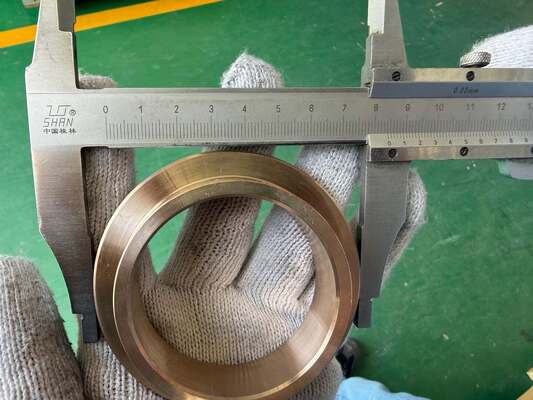
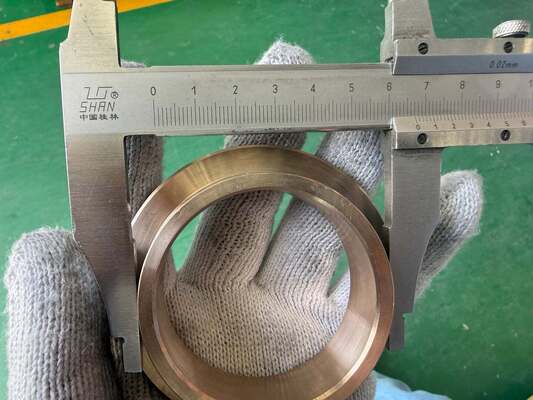
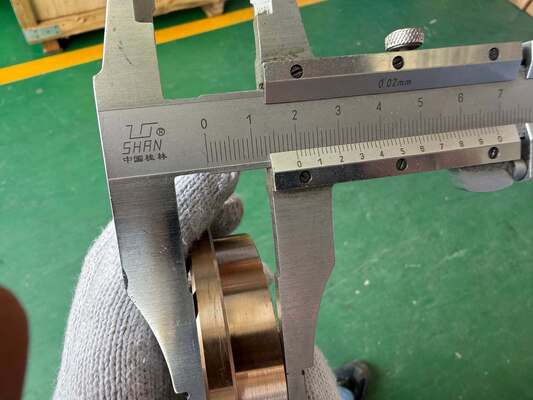
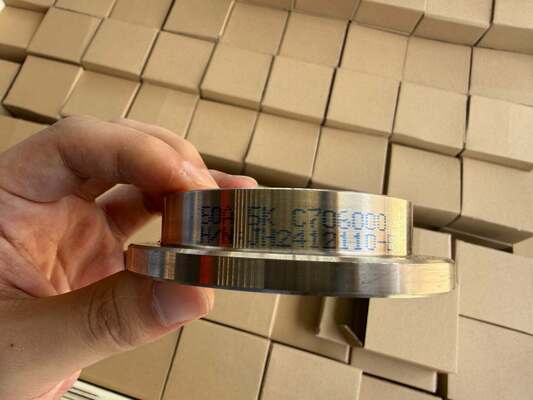
| Place of Origin | Shanghai,China |
|---|---|
| Brand Name | TOBO |
| Certification | ISO/TUV/SGS |
| Model Number | Stub End Fittings |
| Minimum Order Quantity | 1PC |
| Price | Negotiable |
| Packaging Details | Standard Shipping Package |
| Delivery Time | 15-30 Workdays |
| Payment Terms | T/T, Western Union |
| Supply Ability | 10Ton/Month |
Product Details
| Product Name | Duplex Stainless Steel Stub End Fittings ASME B16.9 High Strength Quick Installation Butt Weld Pipe Connector | Temperature Range | -20°C To 220°C |
|---|---|---|---|
| Compatibility | Compatible With Stainless Steel Pipes | Manufacturingprocess | Forging And Machining |
| Standards | ASME B16.9, MSS-SP-43 | Sizerange | 1/2 Inch To 48 Inches |
| Color | Metallic (natural Finish) | Temperaturerange | -29°C To 425°C (-20°F To 797°F) |
| Highlight | duplex stainless steel stub end fittings,high strength butt weld pipe connector,ASME B16.9 stub end fittings |
||
Product Description
Duplex Stainless Steel Stub End Fittings ASME B16.9 High Strength Quick Installation Butt Weld Pipe Connector
1. Product Description
Stub End Fittings, also referred to as lap joint stub ends or backing flanges adapters, are precision-engineered butt-weld pipe components that function as the sealing foundation for a lap joint flange assembly. Unlike conventional weld neck flanges, the stub end is the only part permanently attached to the pipeline via a full-penetration butt weld. The companion lap joint flange is mechanically slipped over the stub end’s cylindrical hub and rests against the flared lip, yet remains entirely unwelded. This structural decoupling between the hub and the flange allows independent radial rotation, which fundamentally changes how the joint handles bolt alignment and thermal expansion stresses.
Manufacturing adheres strictly to dimensional and tolerance requirements of ASME B16.9 and MSS SP‑43. The three recognized configurations—Type A (full-wall, long hub, typical for high-pressure and critical services), Type B (reduced-wall, short hub, common in corrosion-resistant alloy systems for cost optimization), and Type C (light-wall, shortest hub, primarily for low-pressure non-hazardous services)—provide engineers with graded options to balance performance against budget across different piping classes.
2. Product Applications
The practical deployment of stub end fittings spans across both onshore and offshore infrastructure, with particular concentration in:
-
Upstream oil & gas – wellhead flow lines, manifold piping, and gathering stations where frequent disassembly is required for well intervention or pigging operations.
-
Midstream transmission – compressor station piping and metering skids that demand precise bolt alignment under high vibration environments.
-
Downstream refining – delayed coker units, FCCU (Fluid Catalytic Cracking Unit) slurry lines, and heat exchanger bundles where exchanger tube bundles are regularly pulled for cleaning.
-
Aerospace ground support – cryogenic fluid transfer systems (LNG, liquid nitrogen) where metallic sealing faces must remain distortion-free.
-
Chemical tank farms – loading/unloading arm connections that experience repeated mechanical flexing and rotational misalignment.
-
Desalination plants – high-pressure reverse osmosis (RO) feed lines subject to aggressive seawater corrosion.
-
Pulp & paper – digester and bleaching chemical lines requiring routine maintenance shutdowns.
Moreover, they are the preferred choice for temporary or modular construction (e.g., pre-fabricated pipe spools for skid-mounted equipment), as the rotatable flange greatly simplifies final assembly at site, compensating for accumulated fabrication tolerances.
3. Product Advantages
-
Material optimization engineering – The cost differential becomes critical when specifying high-nickel alloys (Hastelloy, Inconel) or titanium for corrosive media. By confining the premium material to only the stub end (typically 15–25% of the total flange assembly weight), while using low-alloy or carbon steel for the rotating flange, overall metallurgical spending can be reduced by 40–60% per joint, without sacrificing wetted-surface performance.
-
Weld integrity preservation – Since the lap joint flange is never welded or heat-affected, the parent pipe weld seam remains the only weld subject to inspection. Post-weld heat treatment (PWHT), if required for the pipe material, is simplified because the flange does not have to be stress-relieved simultaneously. This also eliminates the risk of flange distortion due to welding heat input.
-
Extended gasket and sealing life – The stub end’s flared lip provides a continuous, uninterrupted seating surface free from bolt-hole interruptions. This uniform compression area ensures more consistent gasket stress distribution, significantly reducing fugitive emissions and leakage rates over the flange’s service life.
-
Time-efficient turnaround – During plant shutdowns, maintenance crews can unbolt the joint, slide the flange off the pipe end, and inspect or replace the stub end’s sealing face — all without cutting the pipe or re-welding. This can compress maintenance window durations by 30–50% compared to conventional welded flange replacements.
-
Vibration and fatigue resistance – The non-integral flange design allows slight micro-movements between the flange and the stub end under cyclic loading (thermal expansion, pressure surges, mechanical vibration). This relative motion absorbs stress concentrations that would otherwise be transmitted directly into a rigid weld neck flange, thereby improving overall fatigue life of the joint connection.

4.Key Specifications
| Parameter Category | Detailed Technical Values |
| Size Offering | NPS ¾″ up to 60″ (DN20–DN1500); special diameters available via forging/casting |
| Pressure-Temperature Ratings | ASME B16.5 Class 150, 300, 600, 900, 1500, 2500; compliant with ASME B31.3 and B31.1 design codes |
| Hub Configurations | Type A (long pattern, per ASME B16.9); Type B & C (short patterns, per MSS SP-43) |
| Tolerances (OD & Length) | Outside diameter: ±1.6 mm for NPS ≤ 10″, ±3.2 mm for larger; hub length: ±3 mm; lip thickness: ±0.8 mm |
| Wall Schedule Compatibility | STD, XS, XXS, Sch 5S, 10S, 20, 30, 40, 60, 80, 100, 120, 140, 160 |
| Weld End Prep | Bevel angle: 37.5° ± 2.5°; root face: 1.6 mm ± 0.8 mm; bore I.D. matching pipe I.D. within 1.5 mm |
| Surface Finish (Sealing Face) | Serrated concentric or spiral finish; Ra 3.2–6.3 µm (125–250 AARH) standard; 1.6 µm (63 AARH) for RTJ grooves |
| Material Traceability | Full MTR (Mill Test Report) per EN 10204 3.1 or 3.2; positive material identification (PMI) 100% upon request |
| Non-Destructive Examination | 100% visual (VT) per ASME B16.9; optional RT/UT for weld-end soundness; DPT/MPI for lip surface crack detection |
| Hydrostatic Proof | Tested at 1.5× rated pressure at ambient temperature, held for minimum 10 minutes, zero visible leakage |
| Marking & Packaging | Permanent stencil (size, grade, schedule, heat number, manufacturer logo); wooden crates with edge protectors for export |
| Standards Compliance | ASME B16.9, MSS SP-43, MSS SP-79, EN 1092-1 (for PN-rated equivalents), ISO 15590-1 |
FAQ
1. Are you trading company or manufacturer ? We are manufacturer ,You can see the certification.
2.How long is your delivery time? Generally it is 5-10 days if the goods are in stock. or it is 15-20 days if the goods are not in stock, it is according to quantity.
3. Do you provide samples ? is it free or extra ? Yes, we could offer the sample for free charge but need pay the cost of freight.
4. What is your terms of payment ? Payment<=1000USD, 100% in advance. Payment>=1000USD, 50% T/T in advance ,balance before shippment.
Recommended Products